
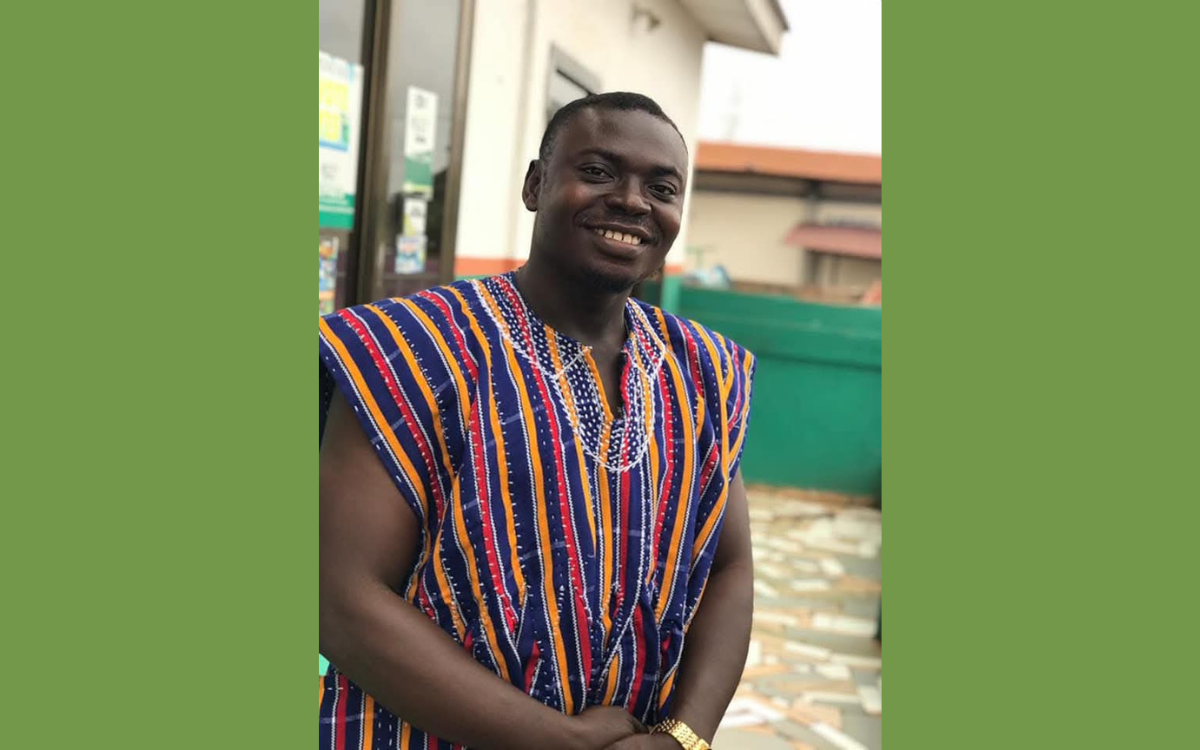
In Ghana, radio broadcaster Ndo Stephen Kwasi has built a career dedicated to ensuring rural communities receive accurate, practical, and empowering information. As the News Editor at Gaskiya FM, he oversees newsroom content and also hosts and produces the station’s flagship socioeconomic program, Mema’n Nti (“For the sake of my country”). Through this program, he connects agriculture, market trends, health, and community development to support farmers and rural families in making informed decisions.
Mr. Kwasi’s passion for broadcasting began early in life. Drawn to the power of radio to unite and inform, he started by contributing small reports at local events. Over time, he noticed how mainstream media often overlooked the daily realities of rural households. This sparked his commitment to create programming that reflects the true challenges and opportunities facing farmers, youth, and families in his region.
One of his most impactful achievements is the investigative documentary Poisoned Harvest: Ghana’s Farming Crisis. This in-depth production explored the consequences of agrochemical misuse, capturing farmers’ experiences, health workers’ insights, and evidence of environmental degradation. The documentary sparked national conversations, increased public awareness, and prompted engagement from policymakers and agricultural extension officers. It highlighted the need for clearer farmer education, affordable protective equipment, and sustainable alternatives such as Integrated Pest Management.
Collaboration is central to Mr. Kwasi’s work. He engages community members, listener groups, agricultural officers, health clinics, NGOs, and Farmer-Based Organizations to ensure his content is accurate and relevant. Listeners actively shape his programming through calls, SMS messages, and advisory groups, making them true co-creators of the content that reaches the airwaves.
His work has not been without challenges. Limited resources, technological constraints, and the difficulty of accessing timely, localized information have forced him to innovate. By building strong networks of on-the-ground informants, using mobile tools for field recording, and hosting community-based broadcasts, he has strengthened both the authenticity and impact of his programs.
A moment that stands out in his career came after the broadcast of Poisoned Harvest. A woman called the station to say that the documentary helped her husband finally seek medical care for symptoms caused by unsafe chemical use. For Mr. Kwasi, this was a powerful reminder of radio’s ability not only to expose problems but to empower families to take action.
Looking ahead, he hopes to expand his work through multimedia campaigns and digital tools. His vision includes a voice-based mobile platform for farmers, a WhatsApp channel for market and agronomy updates, and a youth-led segment that highlights rural innovation. He believes these tools will strengthen community participation and deepen the impact of radio programming.
Mr. Kwasi encourages fellow broadcasters to stay rooted in community voices, collaborate widely, and embrace new technologies to ensure farmers receive information that truly improves their livelihoods.
