
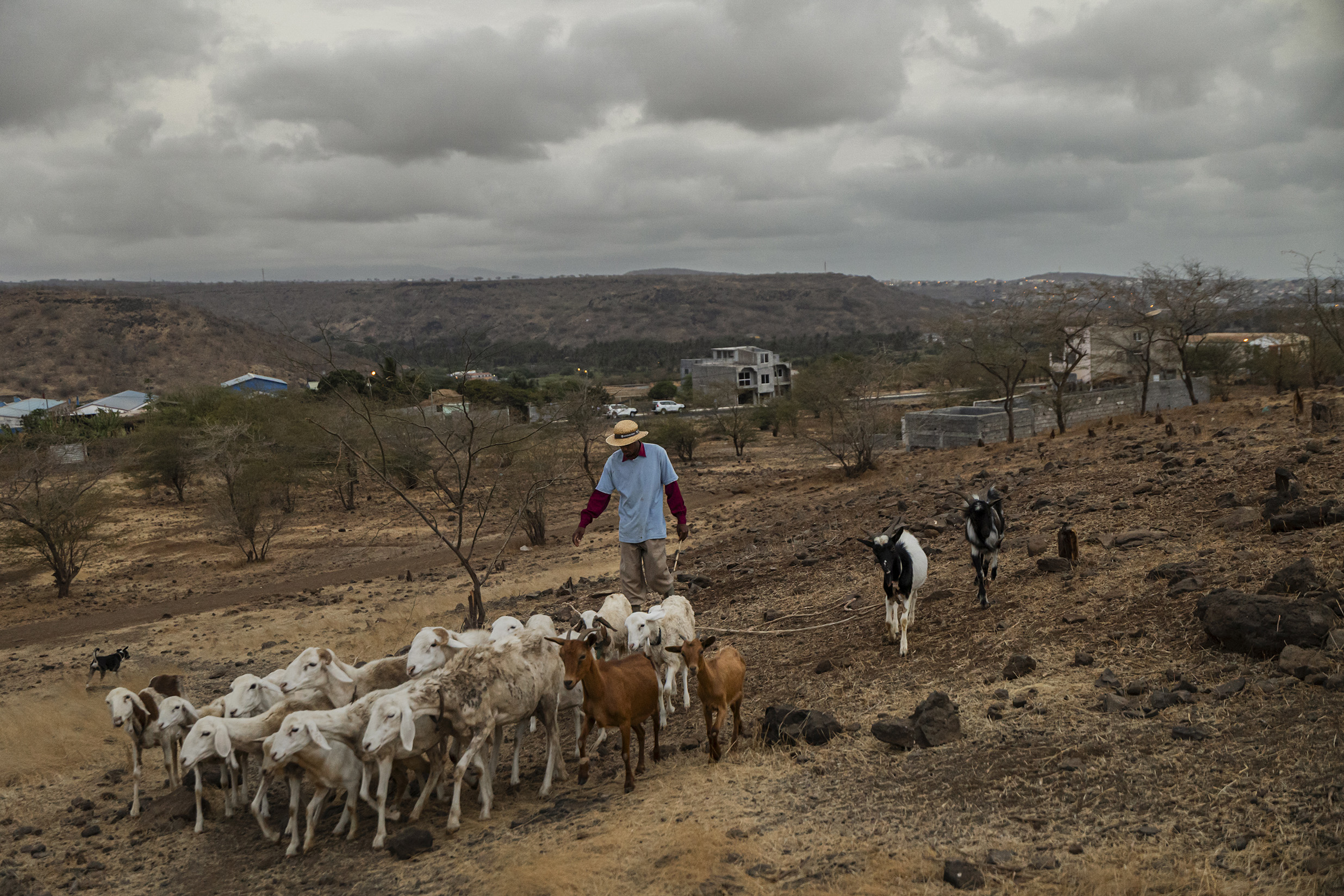
Willy Gonçalves clicks his tongue to get the goats to run a little faster up the tall dirt hill in front of his farm. The goats are in search of grass to eat.
Despite its name, Cabo Verde (translated literally to “Green Cape”) isn’t so green at this time of year. The brutal dry season turns the island of Santiago into even shades of light brown. It will only get hotter, and there are still three months until July when the rainy season arrives, if it starts when it is supposed to.
Leaving the goats to find their own breakfast and make their regular commute back to the farm alone, Willy goes to feed the chickens and begins watering the seedlings that they will hopefully sell that day at Ze Nena’s nursery.
He lifts the sheets that protected the plants overnight, uncovering rows of tomato, onion, cabbage and cassava plants, and fetches a can to fill it from the electric pump spouting out the most precious resource they have in this season: water.
When their farm finishes the reserve of last season’s rain, they have to rely on bought water. It is desalinized, now a major way of producing fresh water on this island surrounded by the Atlantic Ocean.
As with many countries, the temperatures have only gone up, while the precipitation has gone down, leaving farmers more reliant on other water sources, but buying water digs into their profits.

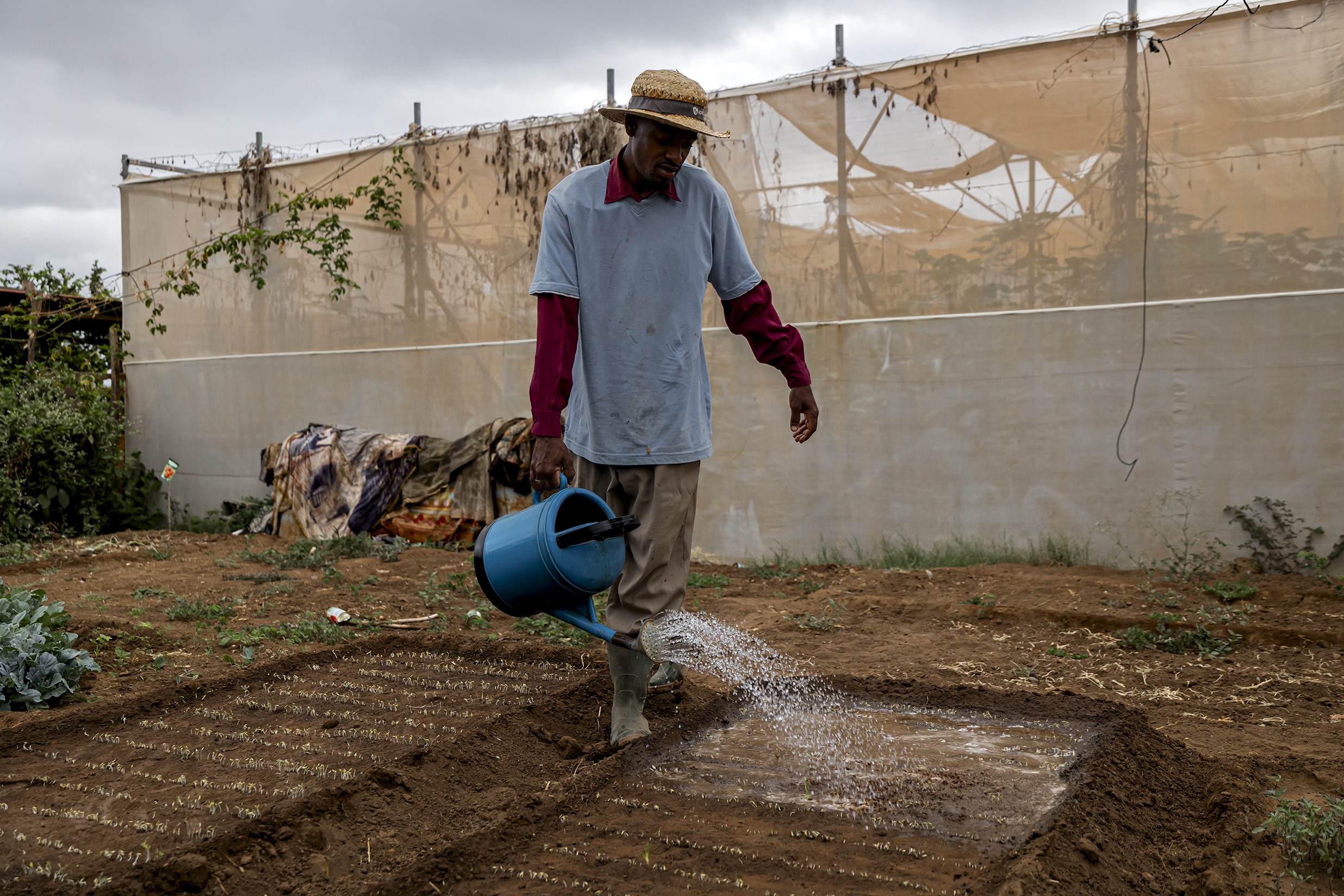
Willy picks up a plant envelope, soil and seedling wrapped in a black plastic blanket. This is his favorite part of the day, planting seedlings, or creating life as he sees it.
It is an act of love that reminds him of his father who died when Willy was just four years old. With his mother’s attention divided between work and six other kids, Willy often felt overlooked. He sought out friendship at the house of his neighbour, Delfina or Nena, as she is better known.
Beginning at the age of nine, he went almost every day to help Nena in the garden and found happiness there. Nena treated him as another son. This is how Nena is. When a farmer needs help, she is there. When Willy’s mom needed someone to care for her kids while she worked, Nena stepped in.
Despite being a good student, Willy left school, but stayed determined to continue his path as a farmer even when his teachers came to try and dissuade him.
Willy describes, “When my teachers came round, they asked me what I want to do with my life because I was a good student. I always responded that this is a dignified job, and it’s profitable… It’s all about good management.”
Willy and Nena worked together on the farm, and it has grown to three times its size.


Now at the age of 71, Nena has left the reins to Willy. He manages the farm, takes care of the land and finance, but Nena’s presence is still very much felt. She is everywhere on the farm, taking care of odds and ends, making food for the workers, overseeing all the activities with the confidence and authority of a woman who has dedicated her life to agriculture.
Willy beams when he talks of her, “She’s always there for everyone who has a problem, from support for building houses to food for those who need it. They always speak highly of her. She’s an example for me to follow, hard-working and respectful of everyone. Everything I learnt was from her.”

With the changes in climate, soil erosion has augmented and soil fertility plummeted, not to mention the explosion of plant pests in the country. The rising temperatures have made Cabo Verde a home where these new pests can thrive. Fall armyworm arrived in 2017 and has since wreaked havoc on maize stocks, not sparing Willy’s crops. Fruit flies that attack mango harvests, in particular, and tomato leafminers, named after their favored target, are other formidable foes.
Through FAO, Cabo Verde requested assistance in fighting these growing challenges and that is exactly what China could offer, having lived through many of these difficulties itself in the vastness of its own country.


The South-South Cooperation projects matches the technologies and experience of visiting countries with the needs and requests of host countries, transferring knowledge and expertise through partnership. China is passing on to Cabo Verde what it has learned in its own rural landscapes, remarkably similar to that of this small island’s interior.
Willy, always interested to learn more, talks about the training, “It was a great help to me. It’s the first time I’ve taken part in a training programme that talks about what we really need.”
