Sustainable Development

Eswatini advances climate-resilient agriculture with modern farming technologies

Eswatini is expanding its climate adaptation efforts in agriculture by introducing protected cultivation infrastructure and climate-smart technologies aimed at increasing food system resilience. The initiative, implemented with technical support from the Food and Agriculture Organization of the United Nations (FAO), was featured during the Coordination Unit for Plant Production and Health’s (CUPPAH) monthly knowledge exchange session. The Eswatini programme showcases the deployment of greenhouse tunnels and shade net structures to

Cabo Verde, a Small Island Developing State, hits back against climate change with skills passed on through South-South Cooperation

Willy Gonçalves clicks his tongue to get the goats to run a little faster up the tall dirt hill in front of his farm. The goats are in search of grass to eat. Despite its name, Cabo Verde (translated literally to “Green Cape”) isn’t so green at this time of year. The brutal dry season turns the island of Santiago into even shades of light brown. It will only get

Future of family farming: Young farmers drive policy innovation for a sustainable future

As the world works to build sustainable and resilient food systems, one essential factor stands out: the renewal of generations in agriculture. Young family farmers are not only the future of the sector — they are its present. With creativity, determination, and new technologies, they are transforming agrifood systems from the ground up. This message was at the heart of the hybrid event “Future of Family Farming: Policy Innovations for

Irrigation and watershed renewal driving resilience in Malawi

In the aftermath of the Tropical Cyclone Freddy’s devastation, Phalombe and Thyolo districts in Malawi faced the urgent task of restoring agricultural productivity and ecosystems. The Dwale, Austen, and Mwaiwathu Irrigation Schemes, once spanning 151 hectares and serving 606 farming households, now operate on only 45 hectares due to the severe damage. To address these challenges, the Government of Malawi, with support from the African Development Bank under the Climate

Her Voice Launches Agribusiness Clinic to Support Women Farmers

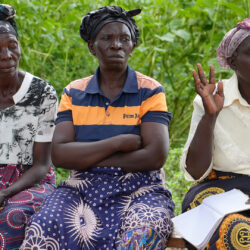
Her Voice, a local agribusiness group, has officially launched its Agribusiness Clinic, a new training and support hub aimed at empowering women, youth, and smallholder farmers across Liberia. The initiative is being implemented with support from the Grow-2 project in partnership with the Ministry of Agriculture. The clinic, launched in Monrovia, is designed to provide hands-on training in merchandise farming, organic cultivation, and farm-to-table systems. It will also serve as

Local Wisdom, Real Impact: 7 Practical Climate Solutions from Rural Africa

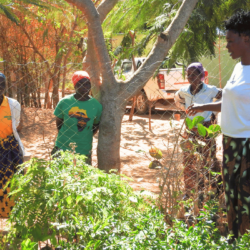
Climate change may seem overwhelming, but African communities are already drawing on centuries of wisdom and combining it with innovation to build resilient, sustainable futures. Here are practical, locally informed strategies that can inspire farmers, community leaders, and development actors across the continent, as featured by Farm Radio International: 1. Plant a tree (or ten) Climate change is taking a toll in Uganda’s Teso region, one of the country’s least

Radio programme: How Tanzanian garlic farmers are preserving quality and boosting income one bulb at a time

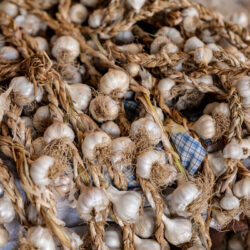
In Tanzania’s Manyara Region, garlic farmers are proving that simple, well-timed post-harvest practices can make all the difference between profit and loss, with support from the MVIWAMA (Mtandao wa Vikundi vya Wakulima na Wafugaji wa Mkoa wa Manyara) and broadcast in Swahili on Habari Njema Radio 87.5 FM, this radio programme is part of the YenKasa Africa Radio Initiative, dedicated to amplifying rural voices and sharing practical farming solutions. This

Behavioural science promotes sustainable and resilient agricultural practices in Zambia

Villagers have planted maize on two plots of land next to each other. The difference between them is that one is cultivated using the method called ripping, or deep tillage, which uses pointed prongs to break up the soil, allowing it to retain maximum moisture. On the other plot, the regular practice of more extensive, shallower tilling is used. Amid a searing drought in eastern Zambia’s Nyimba region, which left

Rural women ring in change in West Africa

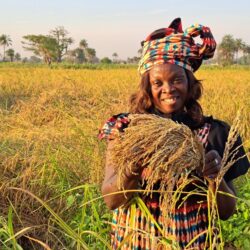
Across West Africa, rural women are showing that small-scale agriculture isn’t just the foundation of sustainable global food systems – it’s an avenue for economic, social and political empowerment. Meet three women who are leading their communities towards a more prosperous and equal future. Breaking ground When Anta was growing up, it was customary for young women to leave their homes in Ngoudiane to find domestic work in Dakar, the Senegalese capital. Anta

Global Call for Stories: Family farmers at the heart of climate-resilient and sustainable agrifood systems

Sharing and learning from the experiences of individuals and organizations driving positive change is critical to advancing the agricultural sector towards greater sustainability. All over the world, there are thousands of stories of distinctive work carried out anonymously by family farmers, including women and youth, on successful transitions to more inclusive, sustainable and fair food systems. Those stories are based on co-creation and sharing of traditional knowledge and innovations that